Your Who created humanistic psychology images are ready. Who created humanistic psychology are a topic that is being searched for and liked by netizens today. You can Download the Who created humanistic psychology files here. Find and Download all royalty-free vectors.
If you’re looking for who created humanistic psychology pictures information connected with to the who created humanistic psychology keyword, you have visit the right blog. Our site frequently provides you with suggestions for seeking the maximum quality video and image content, please kindly search and locate more enlightening video content and graphics that fit your interests.
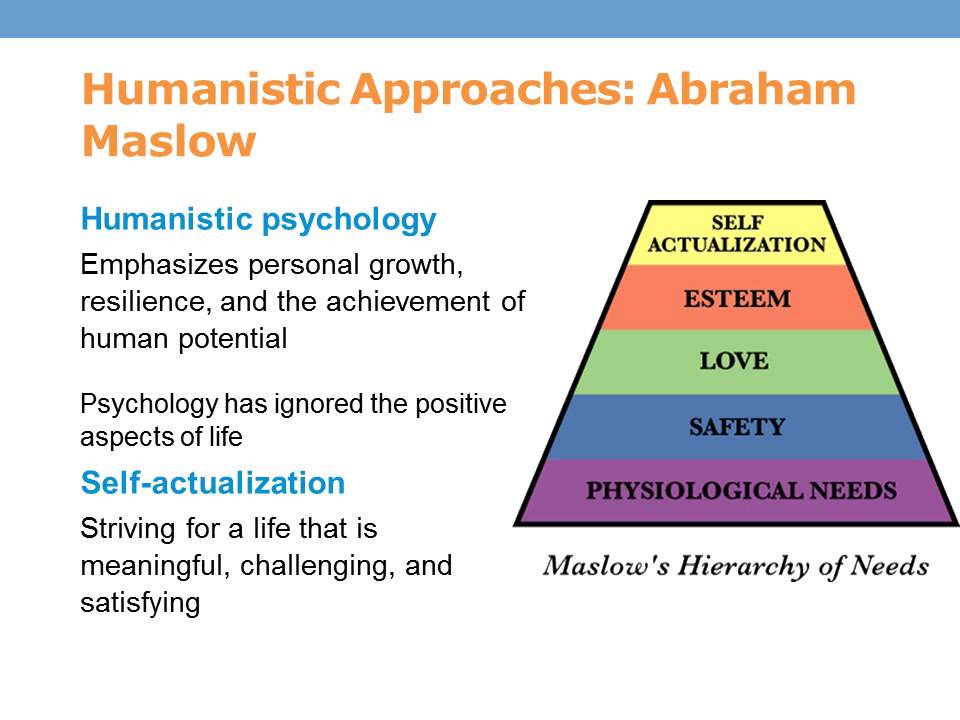
Who Created Humanistic Psychology. One pioneering humanistic theorist was Carl Rogers. The American psychologist Abraham Maslow considered one of the leading architects of humanistic psychology proposed a hierarchy of needs or drives in order of decreasing priority or potency but increasing sophistication. The origins of humanistic psychology can be traced as far back as the MiddleAges when the philosophy of humanism was born. Click to see full answer.
 Late 1950s Early 1960 S Make Love Not War Era Beginning Doesn T Jive With Psychoanalysis Humanistic Psychology Humanistic Perspective Psychology From pinterest.com
Who created the humanistic theory. A Pre-History and a History of Humanistic Psychology. Of the person as a hero struggling powerfully. Carl Rogers developed what would later be called Carl Rogers Humanistic theory. -Concerned with experience uniqueness freedom meaning and choice. The History of Humanistic Psychology.
-The only approach that talks about humans as having free will.
Carl Rogers 1946 publishes Significant aspects of client-centered therapy also called person centered therapy. A Pre-History and a History of Humanistic Psychology. Carl Rogers 1946 publishes Significant aspects of client-centered therapy also called person centered therapy. Two of the most well-known proponents of humanistic psychology are Abraham Maslow and Carl Rogers OHara nd. Had created images of human life as a quest and. One pioneering humanistic theorist was Carl Rogers.
 Source: pinterest.com
The American psychologist Abraham Maslow considered one of the leading architects of humanistic psychology proposed a hierarchy of needs or drives in order of decreasing priority or potency but increasing sophistication. One pioneering humanistic theorist was Carl Rogers. The History of Humanistic Psychology. Carl Rogers and Humanism. -Concerned with experience uniqueness freedom meaning and choice.
 Source: pinterest.com
-Believe humans make their own choices that are not determined by biological and external factors. Fischer in Comprehensive Clinical Psychology 1998 1155 Humanistic Psychology. A Pre-History and a History of Humanistic Psychology. -It aimed to replace behaviourism and psychodynamic. The origins of the humanistic approach lie in a reaction to the psychodynamic approach taken by Sigmund Freud and the behavioural approach adopted by B.
 Source: pinterest.com
History of Humanistic Psychology. A Pre-History and a History of Humanistic Psychology. The origins of the humanistic approach lie in a reaction to the psychodynamic approach taken by Sigmund Freud and the behavioural approach adopted by B. The California-centered countercultural happening which protested societys suppressions is similarly named and is sometimes conflated with a reflectively planned. History of Humanistic Psychology.
 Source: pinterest.com
Click to see full answer. Had created images of human life as a quest and. A Pre-History and a History of Humanistic Psychology. Carl Rogers developed what would later be called Carl Rogers Humanistic theory. Carl Rogers and Humanism.
 Source: pinterest.com
Humanistic psychology emerged as a fullblown professional movement in the 1960s. Had created images of human life as a quest and. The History of Humanistic Psychology. The American psychologist Abraham Maslow considered one of the leading architects of humanistic psychology proposed a hierarchy of needs or drives in order of decreasing priority or potency but increasing sophistication. He was an influential humanistic psychologist who developed a personality theory that emphasized the importance of the self-actualizing tendency in shaping human personalities.
 Source: pinterest.com
Against fates during a journey of psycho-spiritual. The early humanism movement began in 15th century Europe as a protestagainst the closed-minded. In Rogers Humanistic Theory it was about helping. The History of Humanistic Psychology. AHP Founder Abraham Maslow April 1 1908 June 8 1970 was an American professor of psychology at Brandeis University Brooklyn College New School for Social Research and Columbia University who created Maslows hierarchy of needs.
Source: pinterest.com
The history will recount those significant figures in modern psychology and philosophy who provided the foundational ideas and approaches making humanistic psychology what it is today. Two of the most well-known proponents of humanistic psychology are Abraham Maslow and Carl Rogers OHara nd. Physiological needs safety belongingness and love esteem and self-actualization. The early humanism movement began in 15th century Europe as a protestagainst the closed-minded. AHP Founder Abraham Maslow April 1 1908 June 8 1970 was an American professor of psychology at Brandeis University Brooklyn College New School for Social Research and Columbia University who created Maslows hierarchy of needs.
 Source: in.pinterest.com
Carl Rogers and Humanism. -Concerned with experience uniqueness freedom meaning and choice. History of Humanistic Psychology. The early humanism movement began in 15th century Europe as a protestagainst the closed-minded. -It aimed to replace behaviourism and psychodynamic.
 Source: pinterest.com
Bugental in the early 1900s. Two of the most well-known proponents of humanistic psychology are Abraham Maslow and Carl Rogers OHara nd. -Concerned with experience uniqueness freedom meaning and choice. Click to see full answer. Carl Rogers developed what would later be called Carl Rogers Humanistic theory.
 Source: pinterest.com
The humanistic learning theory was developed by Abraham Maslow Carl Rogers and James F. The humanistic learning theory was developed by Abraham Maslow Carl Rogers and James F. The movement grew in opposition to the two mainstream 20th-century trends in psychology behaviourism and psychoanalysis. Of the person as a hero struggling powerfully. The origins of the humanistic approach lie in a reaction to the psychodynamic approach taken by Sigmund Freud and the behavioural approach adopted by B.
 Source: pinterest.com
AHP Founder Abraham Maslow April 1 1908 June 8 1970 was an American professor of psychology at Brandeis University Brooklyn College New School for Social Research and Columbia University who created Maslows hierarchy of needs. Maslow 1943 developed a hierarchical theory of human motivation. He stressed the importance of focusing on the positive qualities in people as opposed to treating them as a bag of symptoms. -It aimed to replace behaviourism and psychodynamic. The American psychologist Abraham Maslow considered one of the leading architects of humanistic psychology proposed a hierarchy of needs or drives in order of decreasing priority or potency but increasing sophistication.
 Source: pinterest.com
Maslow 1943 developed a hierarchical theory of human motivation. The movement grew in opposition to the two mainstream 20th-century trends in psychology behaviourism and psychoanalysis. Click to see full answer. Fischer in Comprehensive Clinical Psychology 1998 1155 Humanistic Psychology. Against fates during a journey of psycho-spiritual.
 Source: es.pinterest.com
-The only approach that talks about humans as having free will. The origins of humanistic psychology can be traced as far back as the MiddleAges when the philosophy of humanism was born. The American psychologist Abraham Maslow considered one of the leading architects of humanistic psychology proposed a hierarchy of needs or drives in order of decreasing priority or potency but increasing sophistication. Two of the most well-known proponents of humanistic psychology are Abraham Maslow and Carl Rogers OHara nd. The History of Humanistic Psychology.
 Source: pinterest.com
Who invented humanistic psychology. Carl Rogers 1946 publishes Significant aspects of client-centered therapy also called person centered therapy. The California-centered countercultural happening which protested societys suppressions is similarly named and is sometimes conflated with a reflectively planned. Who invented humanistic psychology. -Concerned with experience uniqueness freedom meaning and choice.
 Source: pinterest.com
Who invented humanistic psychology. Maslow 1943 developed a hierarchical theory of human motivation. Humanistic psychology emerged as a fullblown professional movement in the 1960s. A Pre-History and a History of Humanistic Psychology. Had created images of human life as a quest and.
 Source: pinterest.com
History of Humanistic Psychology. Carl Rogers 1946 publishes Significant aspects of client-centered therapy also called person centered therapy. Carl Rogers 1946 publishes Significant aspects of client-centered therapy also called person centered therapy. The History of Humanistic Psychology. Two of the most well-known proponents of humanistic psychology are Abraham Maslow and Carl Rogers OHara nd.
 Source: pinterest.com
Two of the most well-known proponents of humanistic psychology are Abraham Maslow and Carl Rogers OHara nd. He stressed the importance of focusing on the positive qualities in people as opposed to treating them as a bag of symptoms. Humanistic psychology emerged as a fullblown professional movement in the 1960s. Against fates during a journey of psycho-spiritual. The movement grew in opposition to the two mainstream 20th-century trends in psychology behaviourism and psychoanalysis.
 Source: pinterest.com
HUMANISTIC PSYCHOLOGY In 1954 Maslow created a mailing list of about 125 like-minded psychologists which eventually became the subscriber base for the Journal of Humanistic Psychology and the members of the Association for Humanistic Psychology The purpose of the journal and professional organization were to construct a set of theories. Humanism was a response to the common educational theories at the time which were behaviorism and psychoanalysis. Against fates during a journey of psycho-spiritual. Abraham Maslow 19081970 was an American psychologist who is best known for proposing a hierarchy of human needs in motivating behavior. AHP Founder Abraham Maslow April 1 1908 June 8 1970 was an American professor of psychology at Brandeis University Brooklyn College New School for Social Research and Columbia University who created Maslows hierarchy of needs.
This site is an open community for users to share their favorite wallpapers on the internet, all images or pictures in this website are for personal wallpaper use only, it is stricly prohibited to use this wallpaper for commercial purposes, if you are the author and find this image is shared without your permission, please kindly raise a DMCA report to Us.
If you find this site good, please support us by sharing this posts to your own social media accounts like Facebook, Instagram and so on or you can also bookmark this blog page with the title who created humanistic psychology by using Ctrl + D for devices a laptop with a Windows operating system or Command + D for laptops with an Apple operating system. If you use a smartphone, you can also use the drawer menu of the browser you are using. Whether it’s a Windows, Mac, iOS or Android operating system, you will still be able to bookmark this website.


